





Back Boxes
When you install a socket or switch, the back box quietly does the hard work. It holds the accessory in place, protects cables, and ensures safe termination. Many installers learn this the hard way—choose the wrong depth or type, and suddenly fittings don’t sit flush, cables feel cramped, or compliance becomes an issue.
Back boxes are a core part of wiring accessories, whether you’re working on a new build, a refurbishment, or a simple replacement. From domestic rooms to commercial sites, the right electrical back box saves time on installation and avoids future callbacks.
Complete Range of Electrical Back Boxes
Finding the correct back box should be simple. That’s why this category covers metal back boxes, plastic back boxes, dry lining back boxes, and surface pattress boxes—all designed to work seamlessly with UK switches, sockets, and wiring accessories.
Installers can select depth, material, and mounting style based on the wall type and cable load. As a result, installations stay tidy, compliant, and easy to maintain.
Types of Back Boxes Available
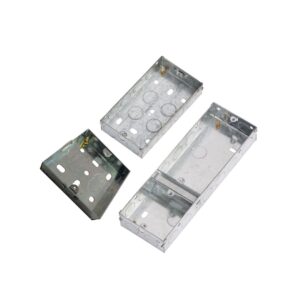
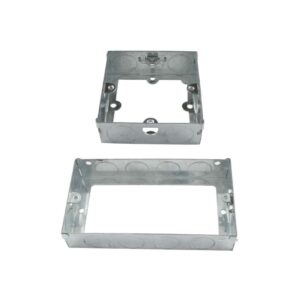
Metal Back Boxes
Metal back boxes are widely used in masonry walls and commercial installations. They offer strength, long-term durability, and secure fixing.
Common sizes include 25mm, 35mm, 47mm, and deeper options for crowded wiring. Metal back boxes also support proper earthing, which is essential for UK compliance under BS 7671.
Best for:
Solid walls, commercial projects, high-load circuits
Plastic Back Boxes
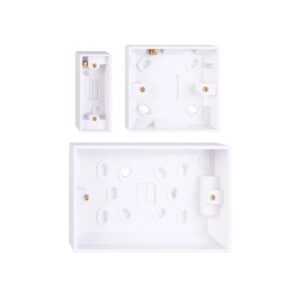
Plastic back boxes are lightweight, corrosion-resistant, and easy to handle. They are commonly used in domestic settings where earthing through the box is not required.
Because they are non-conductive, plastic back boxes reduce installation steps while still providing a clean, secure enclosure.
Best for:
Domestic wiring, low-risk environments, quick installs
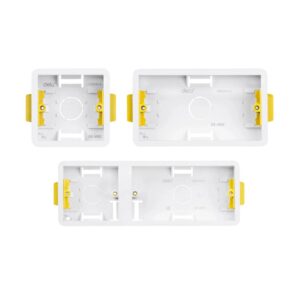
Dry Lining Back Boxes
Dry lining back boxes are designed for plasterboard walls. Instead of chasing brickwork, installers can fix these boxes directly into drywall using built-in clamps.
This saves time and keeps finishes neat—especially in renovations or partition walls.
Best for:
Plasterboard walls, refurbishments, modern interiors
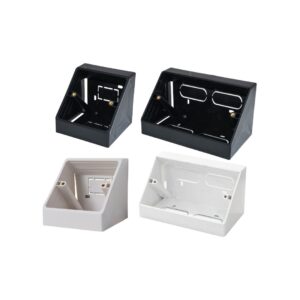
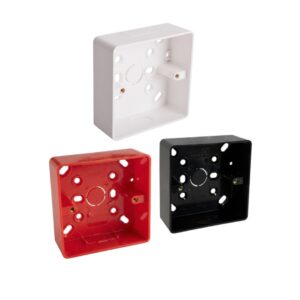
Surface Pattress Boxes
When flush mounting isn’t possible, surface-mounted boxes provide a reliable solution. These boxes mount directly onto the wall surface and allow wiring to run externally.
They are commonly used in garages, workshops, utility rooms, and retrofits.
Best for:
Surface wiring, garages, retrofits, and commercial spaces
Choosing the Right Back Box Depth
Depth matters more than many expect. Shallow boxes can restrict cables and cause strain on terminals.
- 25mm back box: Light switches, limited wiring
- 35mm back box: Standard sockets and switches
- 47mm back box: USB sockets, dimmers, smart accessories
Choosing the correct depth improves airflow, simplifies termination, and reduces overheating risk.
Where Back Boxes Are Used
Back boxes are essential in:
- Electrical sockets and plug points
- Light switches and dimmer controls
- Cooker switches and fused spurs
- Data plates and modular accessories
- Commercial switchboards and panels
In every case, the back box forms the foundation for a safe electrical connection.
Compliance, Safety & Installation Tips
Always select UK-compliant electrical back boxes that match the installation environment. Metal back boxes must be earthed correctly, while fire-rated back boxes are recommended in shared or high-risk walls.
Good practice includes:
- Using correct grommets for cable entry
- Matching box size to cable volume
- Ensuring flush alignment before plastering
These steps prevent faults and simplify future maintenance.
Who Benefits Most from Back Boxes
Electricians & Contractors: Faster installs, fewer fitting issues
M&E Teams: Reliable enclosures for long-term system stability
Facilities Managers: Easier maintenance and replacements
DIY Installers: Safer, cleaner home wiring projects
Trade Buyers: Consistent sizing across multiple jobs
Buying Guide: Selecting the Right Back Box
Start with the wall type—solid, plasterboard, or surface-mounted. Then choose material and depth based on the accessory and cable count.
For future-proofing, deeper boxes often provide better flexibility, especially when installing USB sockets or smart controls.
Frequently Asked Questions
What is a back box in electrical wiring?
A back box is a protective enclosure that houses electrical connections behind sockets or switches.
Do metal back boxes need earthing?
Yes. Metal back boxes must be earthed according to UK wiring regulations.
What size back box do I need for sockets?
Most sockets require 35mm or 47mm back boxes, especially when multiple cables are present.
Can I use surface-pattress boxes indoors?
Yes. They are often used where wall recessing is not practical.
Browse Back Boxes
Explore our full range of electrical back boxes, including metal, plastic, dry lining, and surface pattress options. Each product is selected to support safe, compliant, and professional installations.