





Fire & Security
When safety is on the line, systems must work first time—every time.
Fire risks need early detection. Security threats need a fast response. And compliance must never be an afterthought.
That’s why fire & security systems play a critical role in modern buildings.
At EWS – Electrical Wholesale Supplies, this Fire & Security category brings together fire alarm systems, detection equipment, CCTV, access control, intruder alarms, and monitoring solutions in one place. The goal is simple: help installers design, install, and maintain systems that protect people, property, and operations.
Whether you’re fitting out a new site or upgrading an existing system, the right fire and security components reduce risk, simplify compliance, and support long-term reliability.
A Complete Fire & Security Supply in One Place
Fire and security projects rarely involve one system alone.
Fire alarms connect to detection devices. Security systems integrate with access control and monitoring.
This category is structured to support that reality.
You’ll find fire alarm systems, fire detection devices, emergency warning equipment, CCTV systems, access control hardware, intruder alarms, monitoring accessories, and supporting components designed to work together. Having everything in one place reduces compatibility issues and saves time during system design.
As a result, engineers spend less time sourcing parts and more time delivering safe, compliant installations.
What We Offer at a Glance
This Fire & Security range supports commercial, industrial, and residential applications across the UK.
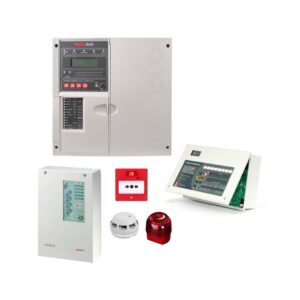
You’ll find fire alarm panels, smoke detectors, heat detectors, sounders, beacons, manual call points, fire detection systems, CCTV cameras, NVRs and DVRs, access control readers, controllers, door hardware, intruder alarms, sensors, monitoring devices, and system accessories.
Each product category exists to solve a real-world problem—early fire detection, controlled access, visible deterrence, or rapid alerting during incidents.
Fire Alarm Systems
Reliable Fire Detection for Life Safety
Fire alarm systems form the backbone of building safety.
They detect smoke, heat, or fire conditions early and trigger alerts that protect occupants and support evacuation. This range includes fire alarm panels, addressable and conventional systems, smoke detectors, heat detectors, sounders, beacons, and manual call points.
Choosing the right fire alarm system depends on building size, occupancy type, and regulatory requirements. Well-matched components improve response times and reduce false alarms, making systems easier to manage over time.
Fire Detection & Warning Devices
Early Alerts That Reduce Risk
Fire detection devices provide the first signal that something is wrong.
This category includes smoke detectors, heat detectors, multi-sensor detectors, fire alarm beacons, fire bells, and sounders. Each device plays a role in ensuring fires are identified early and occupants are alerted clearly.
Proper placement and compatibility with control panels improve system accuracy and long-term reliability, especially in commercial and industrial environments.
CCTV & Video Surveillance Systems
Visible Security and Recorded Evidence
CCTV systems help deter crime, monitor activity, and provide valuable evidence when incidents occur.
This range covers CCTV cameras, IP cameras, NVRs, DVRs, recording accessories, and monitoring equipment suitable for indoor and outdoor use. Modern CCTV systems integrate easily with fire and access control systems, creating a more complete security setup.
Clear imaging, correct positioning, and reliable recording make CCTV a practical tool for ongoing site protection.
Access Control Systems
Managing Who Can Enter and When
Access control systems allow buildings to stay secure without restricting authorised users.
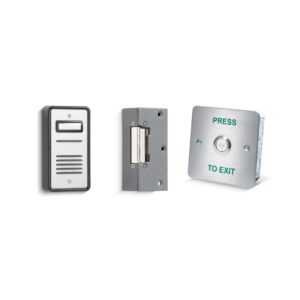
You’ll find access control panels, card readers, keypads, door controllers, electric locks, and supporting accessories. These systems work well in offices, warehouses, residential blocks, and high-traffic commercial spaces.
When integrated with fire alarm systems, access control can also support safe evacuation by unlocking doors during emergencies.
Intruder Alarms & Monitoring
Immediate Alerts for Unauthorised Access
Intruder alarms detect unauthorised entry and trigger alerts before damage escalates.
This section includes alarm panels, motion detectors, door and window sensors, alarm sounders, and monitoring accessories. Many systems also support remote monitoring services, allowing incidents to be addressed quickly.
Combining intruder alarms with CCTV and access control creates layered security that’s harder to bypass.
Fire Safety Equipment & Protection Systems
Supporting Compliance and Risk Reduction
Fire safety goes beyond alarms alone.
This category includes fire safety equipment, fire protection systems, fire risk assessment tools, and supporting accessories that help meet safety obligations. These products support safer working environments and simplify inspections.
Proper fire protection planning reduces downtime, protects assets, and improves overall building safety.
Who Does This Category Help Most
Fire Alarm Installers & Engineers
Installers benefit from compatible fire alarm systems, detectors, and accessories sourced from one place.
Fire & Security System Engineers
Engineers can design integrated solutions using fire detection, CCTV, access control, and intruder alarms.
Electrical & M&E Contractors
Contractors rely on dependable fire and security components to meet project specifications and deadlines.
Facilities & Building Managers
Facilities teams use these systems to maintain compliance, manage access, and protect occupants long-term.
Procurement & Wholesale Buyers
Buyers value consistent specifications, bulk availability, and straightforward reordering for ongoing projects.
Buying Guide: Making the Right Choices
Selecting Systems for the Building Type
Start by assessing risk and occupancy.
Commercial buildings often require addressable fire alarm systems, while smaller sites may suit conventional systems. Security layouts should match traffic flow and access needs.
Integration and Compliance
Fire and security systems work best when integrated.
Ensure compatibility between panels, detectors, access control, and monitoring equipment. Always consider UK fire safety and security standards during selection.
Common Use Cases
Fire & security systems are used in offices, factories, warehouses, retail units, residential developments, healthcare facilities, and public buildings.
They’re essential in environments where early detection, controlled access, and continuous monitoring protect people and assets. Well-designed systems also make future upgrades easier as site needs change.
Technical Specifications & Compatibility
Each product includes clear technical details such as detection type, voltage requirements, communication protocols, and system compatibility.
This helps installers match fire alarm devices, CCTV equipment, and access control components correctly, reducing installation errors and commissioning time.
Supporting Your Workflow
Sourcing fire and security systems from a single category simplifies planning and ordering.
Bulk-friendly options support larger projects, while consistent product ranges help with repeat installations. Clear categories make it easier to find exactly what you need without delays.
Frequently Asked Questions
What’s the difference between a fire alarm and a fire detection system?
A: A fire alarm system detects smoke or heat and alerts occupants, while a fire detection system includes sensors and monitoring that identify fire conditions (smoke, heat, flame) to trigger alarms and sometimes automatic shutdowns or notifications.
Which standards should I follow for fire alarm installations in the UK?
A: Key standards include BS 5839 for fire alarm systems, BS EN 54 for components, and relevant Building Regulations. For England/Wales, ensure compliance with the Building Regulations Part B and local authority approvals; for Scotland, follow the Scottish Building Standards.
How often should fire alarm systems be serviced and tested?
A: Typically, routine inspection and testing are monthly (functional tests), with annual professional servicing. Periodic certifications and full system checks vary by risk assessment and local regulations.
What’s involved in commissioning a new fire alarm system?
A: Design review, device installation (detectors, alarms, call points), wiring/layout verification, system integration with main panel, functional tests, and handover with as-built documentation and certifications.
How do you decide between analogue addressable vs. conventional fire alarm systems?
A: Addressable systems offer precise detector location and diagnostics, best for larger or complex sites. Conventional systems are simpler and cost-effective for smaller facilities with fewer zones.
What should I consider when integrating CCTV with fire and access control?
A: Ensure network bandwidth, compatible VMS/PSIM platforms, event-driven workflows (e.g., alarm triggers cameras), time-synchronised logging, and cyber security hardening (secure passwords, firmware updates).
How important is NFPA 72 compliance for fire alarm systems?
A: NFPA 72 is the National Fire Alarm and Signalling Code in the US; if you’re working in the US market, it’s essential. In the UK/EU, follow local equivalents (BS standards). For international projects, ensure the system meets the target jurisdiction’s code.
What maintenance does a CCTV system require to stay reliable?
A: Regular cleaning of lenses, firmware updates, checking recording reliability, reviewing storage capacity, monitoring power supplies, and ensuring tamper detection is active.
Can fire and security systems be monitored remotely?
A: Yes. Central monitoring stations or cloud-based platforms can receive alarms, enabling remote supervision, instant notifications, and even remote diagnostics.
How do you handle battery backup for fire and security panels?
A: Use properly rated batteries with periodic replacement per manufacturer guidance, ensure mains power is reliable, and test backup during service visits to verify uptime during outages.
What are common causes of false fire alarms, and how can they be reduced?
A: Dust, steam, cooking, aerosols, and faulty detectors. Reduction: proper detector type selection, placement away from kitchens/bathrooms, regular cleaning, and maintenance scheduling.
How do you ensure cybersecurity for networked fire and security systems?
A: Use segmentation, strong access controls, firmware updates, secure remote access, encryption where possible, and regular vulnerability assessments.
What should I consider when upgrading an old system?
A: Assess current coverage, compatibility with new devices, potential for IP-based sensors, power and cabling constraints, and cost-benefit of full replacement vs. partial modernisation.
Are there industry-specific considerations for hospitality, retail, or industrial sites?
A: Yes. Hospitality may need discreet, scalable alerts and guest safety; retail prioritises security integration with IP cameras and merchandising protections; industrial sites require rugged sensors, explosion/flame-proof options, and harsh-environment enclosures.
Browse Fire & Security Systems
Explore our full range of fire & security systems, including fire alarms, detection devices, CCTV, access control, intruder alarms, monitoring equipment, and safety accessories.
Plan confidently, install correctly, and protect people and property with systems built to last.
- Learn Fire Alarm Systems
- Shop CCTV & Surveillance Solutions
- Discover Access Control Systems
- View Intruder Alarm Solutions
- Browse Fire Safety Equipment